Your deluxe aluminium dining set is a high-performance investment that requires the same delicate touch as a luxury sports car to maintain its flawless lustre. You have likely contributed to the £1.46 billion UK outdoor furniture market to create a stunning garden haven, so it is completely understandable if you're nervous about scratching that elegant powder-coated finish. Whether you are battling stubborn bird droppings or sticky tree sap, you need a solution that works without causing permanent damage. This guide will teach you exactly how to clean aluminium garden furniture using professional methods that ensure your set remains a striking centrepiece for years to come.
You deserve a patio that feels like a curated retreat rather than a maintenance chore. We will show you how to achieve a sparkling finish while navigating the new GB CLP safety regulations taking effect on August 15, 2026. From choosing between a £7.00 bottle of HG cleaner and simple soapy water to mastering seasonal care, you will gain the confidence to prevent oxidisation and protect your outdoor sanctuary. This is your roadmap to effortless, high-end garden maintenance that guarantees unparalleled style in every season.
Key Takeaways
- Master the professional step-by-step process for how to clean aluminium garden furniture using pH-neutral solutions and microfibre cloths to preserve its deluxe finish.
- Learn how to safely neutralise acidic bird droppings and stubborn tree sap without using harsh solvents that could damage your premium powder-coated frames.
- Understand the difference between surface oxidisation and destructive rust, ensuring you have the knowledge to keep your furniture as a stunning garden centrepiece.
- Navigate the 2026 GB CLP safety regulations for cleaning chemicals and discover why a gentle garden hose is always superior to a high-pressure washer.
- Implement a curated year-round maintenance schedule that protects your outdoor haven from seasonal challenges like pollen, dust, and sunscreen stains.
Understanding Aluminium: Why It Is the Gold Standard for UK Gardens
Choosing the right material for your patio is about more than aesthetics; it's about longevity in the face of the erratic British weather. Aluminium stands alone as the premier choice for modern havens because it is naturally corrosion-resistant. Unlike steel or iron, which can succumb to the damp UK climate, the inherent properties of aluminium mean it creates its own protective barrier against the elements. While many retailers label these sets as maintenance-free, we prefer the term low effort. Even the most deluxe set requires a gentle touch to remain a stunning centrepiece of your garden. Learning the basics of how to clean aluminium garden furniture starts with understanding that you are protecting a sophisticated finish, not just a piece of metal.
To see why professional care makes such a difference to your outdoor haven, watch this helpful video:
Cast vs. Tubular Aluminium: Does the Cleaning Method Change?
Cast aluminium is the weightier, more traditional option often found in our curated Aluminum Dining Sets. It is poured into moulds, allowing for intricate, ornate details that add a touch of high-end sophistication to any patio. Tubular aluminium, conversely, is hollow and lightweight, making it perfect for modern, modular sets that you might want to reconfigure for a last-minute garden party. The cleaning method remains largely the same, but cast designs often feature dirt traps in their patterns. These areas require a softer brush and a bit more patience to ensure no hidden debris leads to long-term pitting. Additionally, the weight of cast pieces means they are less likely to move during a deep seasonal clean, though they require more effort if you need to reposition them to reach every corner.
The Science of Powder Coating
Most premium garden furniture is finished with a powder coating rather than traditional liquid paint. Powder coating is a dry finishing process used for high-end outdoor furniture. This involves applying a dry powder to the metal and baking it in an oven to create a hard, durable skin. This layer is significantly tougher than conventional paint and provides the beautiful forest greens or navy blues seen in 2026 design trends. When you are looking at how to clean aluminium garden furniture, your primary goal is to preserve this delicate protective layer. Avoiding abrasive chemicals is essential; once the powder coating is scratched or thinned, the metal beneath loses its first line of defence. By treating this finish with the same respect you would show a luxury vehicle, you ensure your furniture stays vibrant and smooth for years to come.
The Essential Step-by-Step Cleaning Method
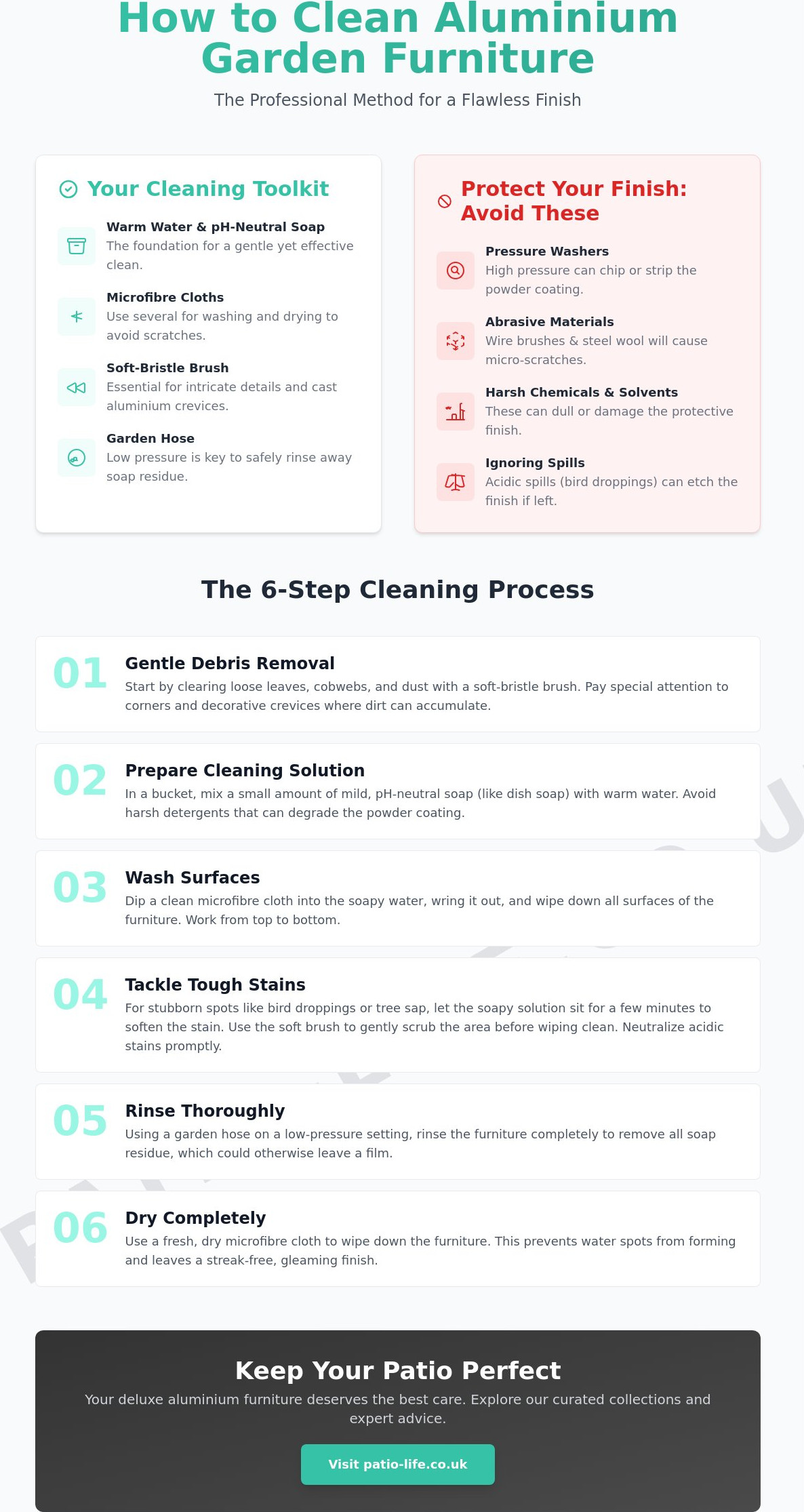
Mastering the art of how to clean aluminium garden furniture is a straightforward process that rewards you with a shimmering patio and a sense of pride in your outdoor sanctuary. Before you begin, gather your supplies to ensure the experience is as smooth as possible. You will need a bucket of warm water, a mild pH-neutral soap, several clean microfibre cloths, and a soft-bristle brush. Avoid the temptation to grab a pressure washer from the garage. While it might seem efficient, high-pressure jets can compromise the integrity of the powder-coated finish, leading to chips that are difficult to repair. Instead, a standard garden hose provides ample pressure to refresh your space without risk.
Step 1: The Gentle Debris Removal
Start by clearing any loose organic matter such as leaves, cobwebs, or dry mud. You should never use a wire brush or steel wool on your furniture; these abrasive materials will create micro-scratches in the protective coating that eventually invite oxidisation. Use a soft-bristle brush to reach into the intricate crevices of ornate cast-aluminium chairs. This is particularly important for sets with detailed patterns where dust and pollen tend to settle. A thorough initial rinse with your garden hose will wash away the bulk of the surface grime, making the subsequent washing stage far more effective and less likely to cause accidental scratching from trapped grit.
Step 2: Washing with pH-Neutral Solutions
The secret to a deluxe finish lies in the chemistry of your cleanser. You don't need harsh industrial chemicals to achieve a professional result. A simple solution of two tablespoons of mild dish soap per five litres of warm water is often sufficient. If you prefer a specialist product, options like the HG Garden Furniture Cleaner (£7.00) or the premium Hartman Universal Cleaner (£19.95) are formulated to be safe for powder-coated surfaces. Apply the solution using a soft cloth or sponge, working in gentle circular motions. This technique ensures even coverage and helps to lift away stubborn films without leaving unsightly streaks across the metal frames.
Step 3: Rinsing and Spot-Free Drying
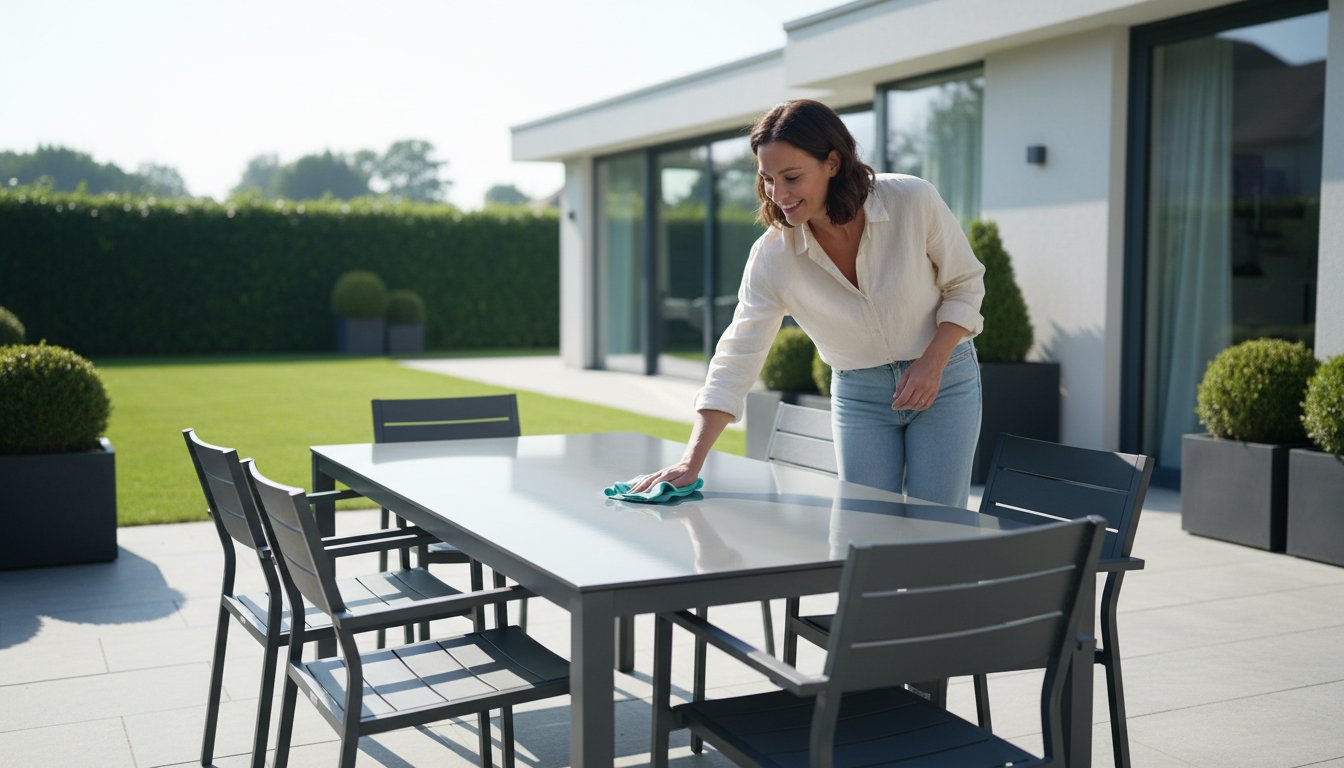
Once the washing is complete, rinse the furniture thoroughly to ensure no soap residue remains. Any leftover soap can attract dust or create a dull film as it dries. For those seeking year-round maintenance tips, the drying phase is where you elevate your results from basic to brilliant. Air-drying often leads to white water spots, especially on dark navy or forest green frames. Use a clean, dry microfibre cloth to buff the surface until it is bone-dry. Performing this task on a cloudy day is a clever trick, as it prevents the sun from drying the water too quickly and causing spots before you can reach them with your cloth. To keep your set looking its best between cleans, consider exploring our Protective Furniture Covers for effortless seasonal care.
Tackling Tough Stains: From Bird Droppings to Barbeque Grease
Even a masterfully curated garden haven isn't immune to the realities of outdoor living. While aluminium is incredibly durable, specific organic and chemical challenges require a more targeted approach than standard maintenance. Bird droppings, for instance, are highly acidic. If left to bake in the afternoon sun, they can permanently etch the powder-coated finish of your set. Prompt removal is the golden rule for any deluxe outdoor furniture. Similarly, tree sap presents a sticky dilemma that often tempts owners to reach for harsh solvents. However, chemicals like acetone or paint thinner will dissolve the very coating you're trying to protect, leading to costly damage that ruins the sophisticated look of your patio.
Removing Grease and Soot from Outdoor Cooking
As the trend for "Outdoor Rooms" continues to grow in 2026, many Patio Life customers are placing their Aluminum Dining Sets in close proximity to high-performance Ooni Pizza Ovens or Gozney Roccbox units. While these facilitate unforgettable moments, they also introduce grease and soot to your furniture frames. To address this, use a concentrated grease-cutting soap specifically on the affected areas. For soot deposits from a steel chiminea, employ the soak method. Dampen a microfibre cloth with your cleaning solution and rest it over the soot for 120 seconds. This softens the carbon buildup, allowing you to wipe it away without abrasive scrubbing that could mar the finish.
Natural Solutions for Stubborn Organic Matter
In certain UK regions, particularly the South East, hard water stains can leave chalky mineral deposits on dark furniture. A simple, eco-friendly solution involves mixing one part white vinegar with two parts water. This mild acidity safely dissolves limescale without harming the metal. For tree sap, a non-abrasive baking soda paste is your best ally. Apply the paste to the spot, let it sit for five minutes, and then gently lift it with a soft cloth. When researching how to clean aluminium garden furniture, you'll find that avoiding bleach and ammonia-based cleaners is non-negotiable. These substances cause discolouration and weaken the powder coating, compromising the elegant look of your garden centrepiece. By using these targeted techniques, you can maintain a sparkling clean patio set with confidence and minimal fuss.
Restoration and Protection: Preventing Oxidisation and Scratches
Understanding the unique chemistry of your furniture is the secret to a lifelong garden haven. While iron or steel sets might succumb to destructive red rust, your aluminium pieces are built differently. Many DIY guides incorrectly suggest using sandpaper to tackle rust, but this is a critical mistake that will instantly ruin your powder-coated finish. When researching how to clean aluminium garden furniture, you'll discover that the goal isn't rust removal, but the management of oxidisation and the preservation of the protective skin that keeps your set looking deluxe.
The Difference Between Rust and Oxidisation
Rust is a chemical reaction that only occurs in iron-based metals, eventually leading to structural failure. Aluminium, however, creates a white, powdery residue known as oxidisation. This layer actually acts as a natural shield, preventing further corrosion of the metal beneath. While oxidisation is self-limiting, it should be cleaned to maintain the deluxe appearance of your garden set. If left untreated, it can lead to "pitting," which manifests as tiny, permanent craters in the surface. Identifying this white chalky residue early allows you to wipe it away with a soft cloth and soapy water before it compromises the smooth, elegant texture of your frames.
Applying a Protective Wax Coating
Once your set is sparkling, the best way to maintain that "just delivered" look is by applying a high-quality carnauba wax. This automotive secret weapon provides an unparalleled layer of UV protection, which is essential for preventing the bold terracotta or navy blue colours of 2026 from fading in the summer sun. Applying wax also ensures that rainwater beads off the surface, which prevents the mineral deposits and water spotting common in hard-water areas of the UK.
- Ensure the furniture is completely dry and cool to the touch before starting.
- Apply a thin, even layer of wax using a soft applicator pad.
- Allow it to haze over for approximately 10 minutes before buffing with a clean microfibre cloth.
You should repeat this process twice a year; once in early spring and once before winter storage. This sacrificial layer makes the process of how to clean aluminium garden furniture even easier during your next routine wash, as dirt won't be able to bond with the metal. If you discover deep scratches that reach the bare metal, use a manufacturer-approved touch-up pen immediately to reseal the finish and prevent oxidisation from creeping under the coating. To ensure your outdoor space remains a haven of relaxation and style, explore our full range of Aluminum Dining Sets and find the perfect centrepiece for your garden today.
Year-Round Maintenance: Preparing for the British Seasons
A curated garden is a year-round commitment that evolves with the shifting British weather. Spring is the moment for a thorough spruce-up. You'll want to clear away any winter grime so your dining set is ready for that first spontaneous barbeque of the season. As summer arrives, the challenges shift. High pollen counts and dust can dull the finish, but a more sinister threat is sunscreen. The oils in many sun lotions can react with the powder coating if left for too long. A quick wipe with a damp cloth after a long afternoon of lounging is the best way to prevent permanent staining. Knowing how to clean aluminium garden furniture throughout the warmer months ensures your haven remains pristine for every guest.
Don't overlook the smaller details like foot caps and glides. These plastic or rubber components prevent the metal from scratching your patio and stop water from entering the hollow tubes of your chairs. If water gets trapped inside and freezes during a cold January night, it can expand and potentially distort the frame. Replacing worn caps is a simple task that protects your investment from the ground up. This attention to detail is what separates a standard patio from a truly deluxe outdoor sanctuary.
The Role of Premium Furniture Covers
While aluminium is famously weatherproof, a high-quality cover is your best ally in maintaining a showroom shine. Explore our range of protective furniture covers to find a breathable solution that prevents moisture from becoming trapped. Breathability is vital; without it, you risk mould growth on your cushions or a green film on the metal. When the British winds pick up, ensure your covers are secured tightly. Loose covers can chafe against the powder-coated finish, leading to dull patches over time. A well-fitted cover reduces the frequency of deep cleans and preserves the elegant lustre of your set.
A Simple Monthly Maintenance Checklist
Consistency is the key to less fuss. A five-minute monthly routine keeps your set in peak condition regardless of the season. Use this time to check for any loose bolts or screws. Ensure your furniture uses stainless steel hardware to avoid unsightly rust streaks from the fixings themselves. If you've experienced heavy rain, a quick wipe-down prevents mineral streaks from forming on the frames. This proactive approach to how to clean aluminium garden furniture means you spend more time relaxing and less time scrubbing when the sun finally emerges. It's about maintaining that unparalleled comfort and style with minimal effort.
Elevate Your Outdoor Sanctuary for Years to Come
Mastering the art of how to clean aluminium garden furniture is the ultimate way to safeguard your investment and keep your patio looking like a curated haven. By choosing pH-neutral cleansers and committing to a bi-annual wax coating, you preserve that stunning showroom finish against the unpredictable British elements. It's important to remember that prompt attention to organic matter and the use of breathable covers are the secrets to a low-maintenance lifestyle. You don't need hours of scrubbing to maintain elegance; you just need the right approach and a gentle touch.
At Patio Life, we are specialists in UK-weatherproof garden furniture, offering a curated selection of high-quality deluxe products designed for unparalleled comfort. Whether you are hosting a last-minute garden party or seeking a quiet retreat, our 24-hour delivery service provides the confidence to transform your space at a moment's notice. We take pride in supplying only the finest centrepieces that facilitate unforgettable moments for you and your guests in every season.
Discover our curated collection of deluxe Aluminium Dining Sets and begin creating your own haven of relaxation today. Your garden deserves a striking centrepiece that remains beautiful for 2026 and beyond.
Frequently Asked Questions
Can I use a pressure washer on my aluminium garden furniture?
You should avoid using a pressure washer on your aluminium furniture at all costs. While it seems efficient, the concentrated jet can chip or peel the elegant powder-coated finish. This exposes the metal beneath to the elements. A standard garden hose combined with a soft microfibre cloth is the safest way to maintain your set's deluxe appearance without risking structural damage or costly repairs.
How do I remove the green algae tinge from my metal furniture?
You can remove a green algae tinge by using a solution of warm, soapy water and a soft-bristle brush. For more stubborn growth, a mixture of one part white vinegar to two parts water safely dissolves organic matter. Regular wiping during damp UK months prevents algae from establishing a foothold in the intricate patterns of your cast aluminium chairs, ensuring they remain a stunning centrepiece.
Does aluminium garden furniture rust if left out in the rain?
Aluminium garden furniture won't rust because it doesn't contain iron. Instead, it forms a natural, white powdery layer called oxidisation that protects the metal from deeper corrosion. While this process is self-limiting, it can dull the shine of your set. Regular cleaning is recommended to keep your garden centrepiece looking its absolute best and to maintain the smooth, sophisticated texture of the frames.
What is the best household cleaner for aluminium frames?
The best household cleaner for aluminium frames is a mild, pH-neutral dish soap mixed with warm water. When considering how to clean aluminium garden furniture, many owners find that non-detergent car shampoo works exceptionally well. It's designed to protect similar high-end finishes. Avoid products containing bleach or ammonia, as these chemicals cause permanent discolouration and weaken the protective powder coating that keeps your set looking deluxe.
How do I fix a scratch on my powder-coated aluminium chair?
You can fix a scratch on your powder-coated aluminium chair by using a manufacturer-approved touch-up pen or matching exterior metal paint. It's vital to seal the scratch immediately to prevent oxidisation from creeping under the surrounding coating. Clean the area thoroughly with a microfibre cloth before applying the paint in thin, careful layers to achieve a seamless, professional finish that restores your furniture's elegance.
Can I leave my aluminium furniture outside all winter?
You can leave your aluminium furniture outside all winter, provided you use a high-quality, breathable cover. While the metal is naturally corrosion-resistant, a cover protects against frost damage to plastic foot caps and prevents the buildup of winter grime. This proactive step ensures your set is ready for a spontaneous spring garden party with minimal effort, maintaining that unparalleled comfort and style you expect.
Why has my black aluminium furniture developed white spots?
White spots on black aluminium furniture are usually mineral deposits caused by hard water drying on the frame. Mastering how to clean aluminium garden furniture includes understanding that you should always buff your furniture dry with a microfibre cloth after washing. If you live in one of the 60% of UK households with hard water, this prevents minerals from bonding to the dark finish and creating unsightly chalky streaks.
Is cast aluminium better than steel for the UK climate?
Cast aluminium is significantly better than steel for the UK climate because it won't succumb to destructive red rust. While steel sets often require frequent repainting to prevent corrosion, aluminium remains structurally sound even in damp coastal environments. This makes it the gold standard for anyone seeking a durable, sophisticated centrepiece that offers unparalleled style with very little maintenance over the coming years.